11 March 2023

The Hybrid Pack System - Revisiting the SAR Hybrid Pack


Mist on the Mountain (photo by V.A. McMillan)

Title: The Hybrid Pack

Last night I received a comment on an older post Build Your Own Backpack (https://mtnmanblog.blogspot.com/2012/06/building-your-own-backpack.html) requesting more information on the hybrid pack I designed and proto-typed. As this is project dating back to 2005 through 2008, pictures were few, but I did locate a few original drawings and notes. So, in this post we will explore the hybrid pack system, which was a blending of ideas between a cargo/gear vest and a day pack. With a light sprinkle of military design influence where specific gear is carried in purpose designed pouches or pockets.


The Original Hybrid Pack (circa 2005)


The SAR Hybrid from 2007

The top photo of the yellow hybrid proto-type was where this all started. I was looking for a soft pack that could be carried in my backpack from trailhead to basecamp and then deployed carrying all the essentials for day hiking – camera, water bottle, first aid kit, multi-tool, knife, jacket, and lunch.


The Hybrid in Action (July 2005)

At about this time, I was also involved with my local volunteer search and rescue (SAR) unit. While there I proto-typed a couple different gear vests and the SAR hybrid pack (called the EXOSAR, on some of the drawings.) When I left the SAR unit, I left all the vests and the SAR hybrid pack behind for other SAR members to make use of during SAR training or operations.

While I cannot direct the commenter to a location to purchase the hybrid style of pack, I will endeavour to share enough information here, for them to build their own hybrid pack and it will allow for the customization of the pockets and pouches to fit their personal gear. I will share a few more pics and then end with the design notes and build sheets.

Shall we…


Right Side

Left Side

Front

Back

(Click on photos for a larger view.)


The Original Proto-type Hybrid Pack Notes (2005)

Improvements for the Proto-type Hybrid Pack (2005)

SAR Hybrid Layout (2006)


SAR Hybrid Design Sheet (2007)


Design Sheet Hybrid vs Vest (circa 2006 or 2007)

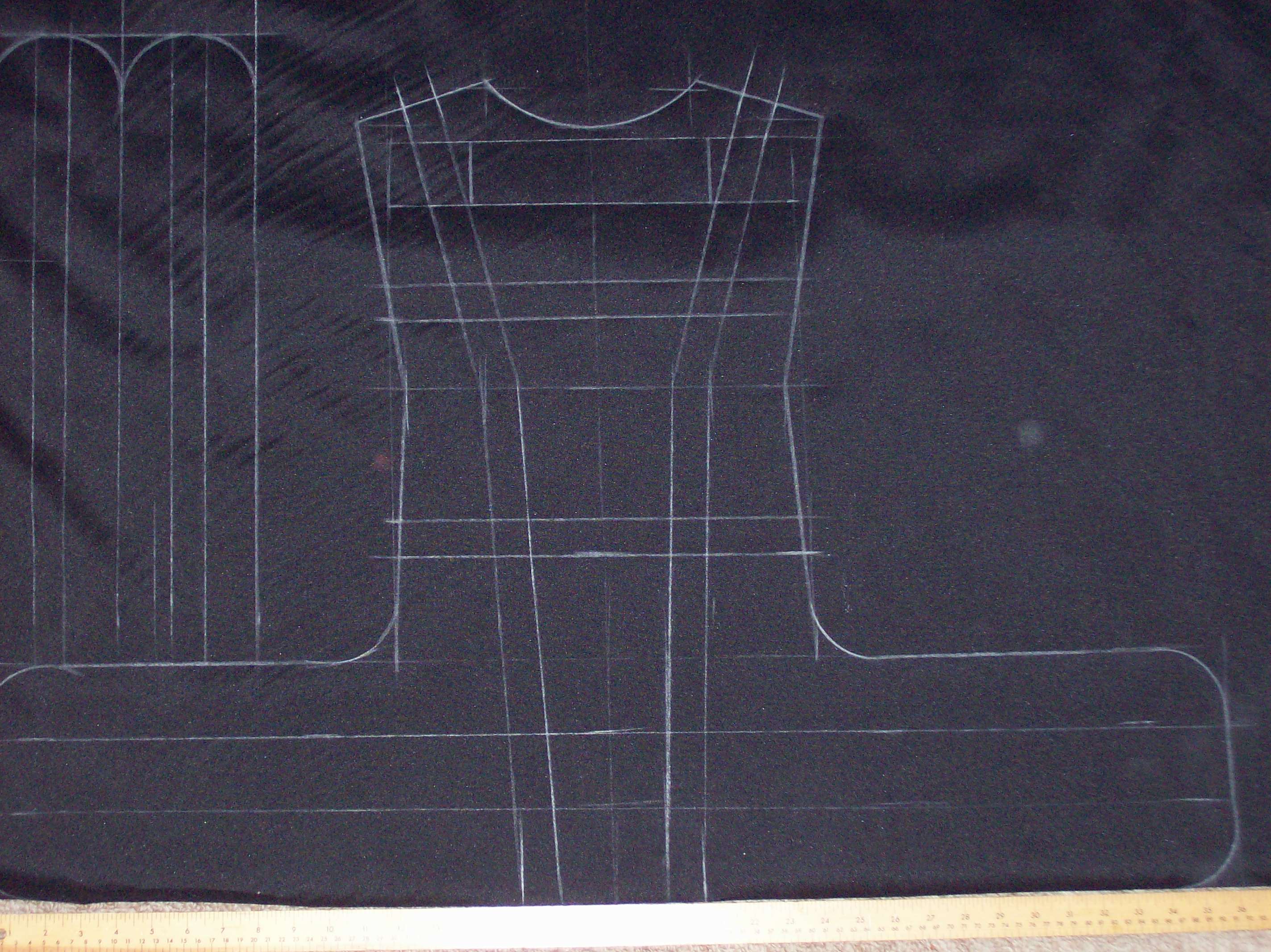
Now just a few pictures showing the layout on fabric and the cut out base layers - inner, outer, and foam sandwiched in between. Placement lines for where the webbing will be sewn are also visible.


Design Chalked on Fabric

Shoulder Straps Sewn to Body

So, you may notice this pack system starts with a garment like base layer, which includes an outer and inner layer that sandwich a layer of ¼” foam. The edges are sealed by sewing seam tape over the perimeter edge. The base layer of webbing for the harness is sewn on top.


Some of the Cut List for the SAR Hybrid

The Cut List for the Original Hybrid Proto-type


Then all the pouches, pockets, and assorted attachments are added to the base. Each item is basically built as a stand alone item before being sewn to the base. This allows an experienced fieldcrafter to only build the gear holders necessary to carry their gear…and very little waste or unused pouches, pockets, or accessories. Obviously, you must know what gear you need on a typical trip to the field for this to be effective and efficient. The military uses PALS and MOLLE as methods to have a base layer vest or pack that can have pouches, pockets, and accessories added or removed depending on the mission. In my opinion, the hybrid pack seems to work best with hard mounted items. Thus, different field missions would require making separate hybrid packs.
Pocket Detail from SAR Vest 2008


The big bonus to the hybrid pack system is it is fast to build. The base layer can be sewn together quickly and is soft enough to be easily manipulated through the sewing machine when attaching the pouches, pockets, or accessories. In my experience, unless your sewing machine has a tall and deep throat, manoeuvring a pack through the machine becomes more and more challenging as the pack becomes more complete. The one downside to a pure gear vest, is lack of breathability. Too much of the torso is covered by fabric. The hybrid pack is very open on the front allowing excellent air circulation and humidity control.

I hope this helps explain the hybrid pack a bit better. Maybe this will inspire others to start making their own gear?!? Best success!!

Until next time…if you cannot find the gear you need, it is time to learn how-to make it yourself!!


Mountainman.


27 February 2023

Kool Keyboard Gadget - JANSJO USB LED Lamp


Winter Mountains (photo by V.A. McMillan)

Well, February has flown by...the month is almost over and I am just getting to posting...

It has been a long time since I recommended a new piece of kit, and quite by accident I happened upon this month's post subject - the JANSJO USB LED lamp unit from IKEA:

IKEA JANSJO USB LED Lamp

This is an ultra low power LED lamp unit that is powered through your computer's USB port. For those who are like me, and never learned to touch type, this little lamp might be the best invention in a long time. Now I have a compact light to illuminate my keyboard without having to resort to powering up other lights in my office/study just so I can type my blog posts. 

Keyboard Illuminated

The light halo cast by this lamp is visible arcing on the keyboard. The camera has falsely illuminated the whole area, however the JANSJO does produce adequate light to see the keyboard in absence of any other light source in the room. 

The unit has a metal flex shaft and a plastic lens and LED lamp casing. Treated well this light should last for years. I will post an update in the future if and when this lamp reaches the end of its service life. The added benefit that this lamp is affordable does not hurt my feelings. At $5.25 including GST, even a student can afford one of these. Might be worth picking up a few. Keep one in the truck to use as a map light light when plugged into a vehicle USB port or a charger in the cigarette lighter socket. 

Until next time...keep a lookout for useful kit!!

Mountainman. 


22 January 2023

Table Top Exercise (TTX) Game Board for CERT SIZE-UP (Template)

Winter Highway (photo by V.A. McMillan)

 Title: Table Top Exercise (TTX) Game Board for CERT SIZE-UP (Template)


Over on The GOOD Plan Blog (https://thegoodplanblog.blogspot.com/2023/01/cert-lsar-table-top-exercise-game-board.html) the discussion has begun on CERT SIZE-UP for Light Search and Rescue (LSAR) TTX game board. This post will look deeper into the game board and how it can be developed and modified to meet the needs of CERT units for both the CERT Basics and monthly training.

Here is the TTX game board template I designed that CERT trainers and team leaders should be able to duplicate for their units and training programs:

The TTX Game Board Template (Click to enlarge)


The first obvious difference from the game boards shared on The GOOD Plan Blog and the TTX template, is the map and its replacement by a PowerPoint “map” icon. If a CERT unit was to duplicate this template for use with their CERT Unit, they would insert a map of their own neighbourhood to ensure meaningful training with relevant geography. CERT is all about neighbours helping neighbours. So, it makes sense to train where you live and live where you train. This builds confidence in knowing what and where you will be responding when disaster strikes.

The game board is created in PowerPoint and requires creating a custom sized slide that is 36” wide by 24” tall (90 cm X 60 cm). The rest is just text boxes that are outlined. So, let’s go around the template and chat about each component and the thinking when I designed this. Starting in the top left corner…see Figure 1:

Figure 1


The information captured in the top left corner of the game board will be the physical events components of the TTX. For items like wind, or fire, or floods/waves; there will be a direction of origin (the Threat Vector) in this circle the direction will be drawn as an arrow. Next the Threat Type will be identified at the start or once the threat has been identified. Circle one or more event types that have/are impacted/impacting the CERT neighbourhood. Then we drop to the next text box for a few more details. Is this TTX starting in the day or at night, circle the appropriate word. Same with whether this is a weekend event or weekday event. From a CERT perspective this will help identify the expected occupancy level in the neighbourhood. Then fill in the start time, using 2400-hour time. 0600 = 6am, 1800 = 6pm. Now for events that may have meteorological clues before the event, like some wind events. There can be high temperatures and rising humidity that are pre-cursors to the weather event. So, for the TTX the game master may want to inject specific weather data to help build awareness in the CERT participants. If a wind event has high temperature say above +35C at the start with relative humidity (RH) of 84% and rising, and then the wind event hits and the temperature drops to +20C with 97% RH, over time the CERT members may begin to see a pattern of local weather events and aftereffects. Finally, the note section allows for attaching any other game notes or player observations, which will be discussed during the TTX debrief.

Figure 2


Figure 2 is your CERT team roster. First player on this list wins, they are the SAR Team Lead!! Congrats, this player gets to be boss for this TTX. Game masters you can either preload the roster with CERT student names or as CERT members arrive at the designated rally point the roster gets filled in on a first-come, first on the list basis. Realistically, every CERT member should get practice at every role or position to build familiarity and depth to the CERT team. The TTX template game board is currently preloaded with the SAR Team Lead, two LSAR teams and a rescue team. Depending on the scenario used by the game master the roster could be left blank, and roles and positions will be determined by the SAR Team Lead in response to the nature of the event, or pre-determined to speed up the game cycle of training, like in the CERT Basics course.

Figure 3


The remaining nine boxes are pretty self explanatory, see Figure 3, these are the nine-steps of CERT SIZE-UP. While this TTX template was focused on LSAR tasks, a CERT trainer or CERT Team Lead could modify this for use in any CERT scenario employing the nine-step SIZE-UP process. In this case, the game master will present the CERT team with challenges or answers to their questions as the CERT team works through the scenario. Game masters may wish to develop a master list of event sequence for a complex TTX, so as not to get lost during the exercise. The nine-step CERT SIZE-UP is not necessarily needed to be memorized so the headings and clues on the game board can be used to guide the learning of the CERT students and refresh the memory of CERT team members as they work through the TTX. The complexity of the scenario would determine how many cycles through the SIZE-UP would occur before “END EX” has been achieved.

I hope that provides a good walk through of this CERT TTX game board template. I will get an opportunity to put this concept into practice in a few weeks to see how well it worked and what improvements are needed.

Until next time…Get out there and train!!!

Even if it is only on a game board conducting a TTX!


Mountainman.


19 January 2023

Not Too Late to Register!! CERT Basics Course

Mountains (photo by V.A. McMillan)

Title: Not Too Late to Register!! CERT Basics Course


CERT Canada is running a CERT Basics Course, 27th – 28th of January and concludes on the 4th of February 2023. (See poster below for full details.) Contact CERT Canada to register online (https://www.bridgesoflove.net/events) or by calling the CERT Canada office (403) 649-0087), for more details.


Poster from CERT Canada


Community Emergency Response Training (CERT) is a community level training scheme to ensure prepared citizens are ready to step up during times of emergency or disaster to be neighbours helping neighbours until first responders can arrive and take-over the response. CERT traces its lineage back to the mid-80’s in Southern California. Since then, the Federal Emergency Management Agency (FEMA) has taken the CERT program nationwide in the United States. CERT Canada in endeavouring to spread the program across Canada. For a deeper look into CERT and its role in the community, please, join me on The GOOD Plan Blog (https://thegoodplanblog.blogspot.com/2023/01/cert-basics-course-still-time-to.html).

So, do your part to become a member of a prepared citizenry and get trained in CERT Basics. Better, yet, bring your whole team to get trained at the same event!!! Remember, community can be your neighbourhood where you live, or the place where you work, or the place where your worship. However, you see your community and your part in it; know that as a trained volunteer you will make a difference when disaster strikes!

Before I forget, Mountainman will be at this training event on the 4th of February to instruct the CERT Light Search & Rescue unit. I hope to see you there.

Until next time…Get some training!

Mountainman.


22 December 2022

Online Learning – Some Benefits of Asynchronous Program Delivery


The Rockies (photo by V.A. McMillan)


After the better part of four solid years of online learning, I thought it was about time I shared what worked for me, what didn’t. and what could be improved if you were designing an online delivered learning program. As always, these are my thoughts, opinions, and suggests; and the outcomes for others in a similar situation may differ.

One of the motivators for this post was something I read late last night regarding changes to education delivery during the response to COVID-19. The writer seemed to imply that post secondary education delivery outside the normal on campus classroom setting was somehow an inferior education product. Therefore, I accept the challenge, and will proceed to share how an alternate learning model can, not only be successful, but be very fulfilling for the adult (mature) learner.

First, I want to acknowledge that the writer’s position is not wrong for some learners. Some folks thrive in an environment with person-to-person contact. In fact, they can become energized and achieve great things when a collective synergy is created. And to those learners, I suggest you stop reading here. You know what learning environment works for you, and I suggest pursuing that model. On the other hand, if the classroom learning environment has been a challenging and less successful delivery model for you and you are curious to discover a different way to be enlightened…please, read on.

As I stated in the introduction, I have been a full-time student for the last four years. I chose to utilize an online degree program from a reputable school in the field of emergency management. I was not forced into an online program part way through my degree by the COVID-19 outbreak and response. Just so we are clear, I sought this form of education delivery intentionally. The reason for this was recent positive past experiences taking some shorter duration online learning courses from the Alberta Emergency Management Agency. I found the delivery of learning materials on an online platform worked for me. But not all online programs are created equal.

For the purpose of our discussion today, we will divide online program delivery into three basic categories: 1) Individual self-directed studies, 2) Synchronous instructor led classes, and 3) Asynchronous instructor guided classes. The first category is a solo effort by the student which can be graded or evaluated by an instructor or some form of automated method, usually true/false or multiple-choice tests and quizzes. An example would be Incident Command System (ICS) level 100. ICS-100 can be an in-person course or taken online. The online version would be a self-directed study type program. The second category is basically a decentralized virtual classroom whereby the instructor presents their lessons via an online video sharing platform. These platforms could be D2L (https://www.d2l.com/) or Blackboard (https://www.blackboard.com/en-mea/teaching-learning/learning-management) which create a secure interface to connect students with their instructor. As these are “live feed” delivery or streaming video links, the students must be in attendance when the instructor is giving their lesson to be able to benefit from the delivery. Finally, the third category – Asynchronous, is the method of online lesson delivery that is not dependent on the schedule of students or instructors meshing at a specific time on a specific date. Usually, learning materials will have weekly reading assignments, a weekly class discussion forum, and a mix of papers and/or group projects to engage students in applying what they learnt from the weekly requirements into larger, more involved assignments. As students and instructors are not required to be at the same place at the same time for effective information exchange, asynchronous program delivery is favourable to employees who work shift work and are taking educational upgrades. Like synchronous delivery, asynchronous delivery would use a platform like D2L or Blackboard to connect students and instructors to learning materials and assignment submissions.

Before continuing with a more in-depth discussion of the components identified in the next paragraph, I just want to briefly sketch out the semester system I learned under while at the Justice Institute of British Columbia (JIBC). We used either a fourteen- or fifteen-week semester. Fifteen-week semesters included a reading week, when in theory no assignments were assigned nor due. In reality, students were usually given extra readings to enjoy during this week or occasionally used the time to catch up on essays, reports, group projects, or research papers. Rarely, was this a holiday away from studies. There were three semesters a year – Winter (Jan-Apr), Spring-Summer (May-Aug), and Autumn (Sep-Dec). Three or more courses per semester attained full-time student status, which was good to know when seeking student loans. Also, my experience was gained using the Blackboard online learning platform. Not a perfect platform by any means, but it operated well most days. It did not crash often. System updates and maintenance were usually scheduled in the gaps between semesters. And of course, users of the system had to become acclimatized to the idiosyncrasies of the platform before becoming a proficient user.

Successful online asynchronous program delivery is achieved when course content, lesson plans, assignment timelines, student and instructor expectations are clearly identified at the start of the course. This can be achieved using a course syllabus, which contains all critical course information and methods to contact the instructor. In addition, a secure online platform to facilitate interaction between students and the instructor is required. This platform must be stable and have enough operating bandwidth to accommodate the expected class size (volume of online traffic). Furthermore, the learning materials must be divided into weekly learning objectives. These weekly objectives will include required textbook(s), or article(s) readings, weekly discussion forum questions or topics, and possibly video(s) watching. If the instructor is providing articles for students to read, these articles should be in PDF, as that format is widely available for reading on multiple devices – desktop computers, laptops, tablets, or smartphones. Additionally, there will be other assignments throughout the semester to fortify student comprehension of the course materials. These could include quizzes, tests, short essays, long essays or research papers, group projects, and/or presentations.

Let’s delve into these components a bit deeper, shall we…

Syllabus is the guiding course document that the student refers to when planning out their semester. It should include:

·       ALL assignment dues dates

·       Methods of communication between student & instructor, and the rules

·       Expectation of both the student and the instructor (acceptable and not acceptable)

·       Details of major assignments, research projects, or group projects

·       Grading matrix or rubrics can be included in the syllabus or issued as separate documents. However, the grading standard should be available to the student

·       General guidelines of discussion forum etiquette and minimum discussion forum participation criteria

·       Reference list of course textbooks and required reading articles or videos, using proper citation format used by the school or institution (i.e., APA 7)

The syllabus should contain all the need-to-know information, maybe some good-to-know tips, but no nice-to-know filler information.

Quizzes & Tests should be employed to fortify or reinforce learning materials in an appropriate way at the correct year of study. In first- and second-year course, having up to 15% of your semester grade determined by quizzes and/or tests would be acceptable. Third year, maybe up to 10% of the semester grade, and no more than 5% of the final grade for fourth year courses. Now, all quizzes and tests are not the same. And online learning has some peculiar requirements for these types of student’s knowledge evaluation. There are two types of quizzes/tests – one of which that is reviewed and graded by the instructor (superior type) and those that are designed to be marked by a machine (inferior type). Yes, I have an opinion on which is the best type to employ.

True/false or multiple guess type, machine graded quizzes and test must be designed and written to a very high quality to be of any use. If the questions are ambiguous or the answers are likewise unclear the student is disadvantaged and unfairly assessed. Furthermore, all quizzes and tests used must be designed as open book exams. Instructors skilled in education delivery understand how to write these types of evaluations that truly challenge the student. Having an open book is only an advantage to the students who have done their readings, reviews, and taken notes of where information came from. Those students who have failed to study or read the material will not be able to fake a high score, just because it was an open book exam. Of course, with T/F or multiple guess there is a possibility of random success. Thus, the reason I do not see value in these types of exams in the higher-level learning. One does not want to have their grade determined by random luck.

The far superior method of quizzing and testing is for the instructor to devise open ended questions, short essay questions, or applied problem-solving using skills taught in class or synthesized with real world experience. These exams are much more work for the instructor to create and grade, however they generally do a better job of evaluating the student’s level of comprehension of the course materials. The other benefit for the student is that partial marks may be awarded if the student has grasped partial understanding of the concept. This identifies where the student needs to apply more resources to grasp the concepts that did not score well on the exam.

Finally, any testing that is based on memorization and regurgitation of the textbook to achieve the best grades should be discouraged in post secondary learning environments, with a few exceptions. Where the information is the matter of life or death; memorization or practice repetition until competent, should be the proper course of action. For example, anyone studying medicine should be well skilled in the ABCD’s of care – airway, breathing, circulation, and deadly bleeding. This goes from those in standard first aid through nursing through to doctors. These skills save lives and that is important to know and practice. The Chi Square method of whatever in statistics…can be looked up and referenced before being calculated, who would bother to memorize that??? Like a soldier on the battlefield, he or she must know how to operate, maintain, and repair their personal weapon and section weapons systems. These skills need to be trained and drilled until they cannot be forgotten. Failure of the soldier in their individual combat skills means their buddy will die on the battlefield. Therefore, these battlefield skills must be memorized or trained to perfection to keep unnecessary loss of life to the minimum. Project management, business continuity management, research, and similar topics do NOT require memorization. Instructors who resort to machine marked exams, that are not authorized as open book, are NOT accurately evaluating the abilities of the learner. They are only evaluating the student’s capacity to memorize and regurgitate course materials on cue. This does not evaluate the student’s ability to process information, compare and contrast options, come to a supportable decision in a timely fashion. In plain language, the instructor is failing to prepare the student for the environment the student will eventually have to operate in.

Essays & Research Papers are the quintessential writing format of post secondary education. All students must become accustomed to writing these types of papers. In the academic world a scholarly paper presents facts and supported opinions in an objective manner to persuade the reader to accept the writer’s position or to challenge the reader to write and share a rebuttal paper contesting the findings of the other writer. The process starts with a topic, maybe of the student’s choice or not, and then the student conducts research to find supporting evidence for a position and conflicting arguments and presents both in their paper which is fully cited and referenced. Where these types of papers can run afoul is when the instructor does not trust the students to conduct effective research and micromanages the paper writing process. In effect, the student writes the instructor’s paper, using the instructor’s sources. Thankfully, these types of instructors are not the norm…at least in my experience during the last four years.

Now depending on the available window of time to craft an essay or research paper will directly impact the expected length of the paper. One week and an essay would be in the 750 to 1000 words in length. One-month 1500 words. Six weeks 2000 words. Capstone research project 5000 to 7000 words. There must be some balance between time invested researching and giving the student enough space to share what they have learned.

Presentations offer an interesting divergence from writing a paper to share what the student has learned from their research. Presentation almost always implies a project that is visually appealing. This can be a video, or PowerPoint, or poster, or infographics, or interactive show & tell. Because not all learners thrive in the written world, having alternate means of expression helps all learners experience things inside and outside their comfort zone. And being outside your comfort zone is where real learning takes place, right?!?

Group Projects which seem like a great idea in year one & two, begin to lose their appeal in years three & four when you become fully aware that your grades in a course no longer can be determined by your efforts and engagement alone. While I will say there is a lot of merit in practicing to work in group environments to conduct research and collaborate to develop a shared output product – report or presentation; there can occasionally be too much emphasis or too much weight placed on a group project. In project management it is absolutely imperative to be able to work together to achieve success with your project. In other courses, while the concept of a group project may be fun, if the group does not bond rapidly there is the potential of a negative experience and outcome. While this negative experience can be a good learning tool to aid in future project work success, too many of these in a short time frame and the student may lose commitment to future group projects. Conducting group project in a virtual environment also adds challenges, as does operating asynchronously. In this environment having some method of sharing a multiple author editable document that all members can modify at their convenience helps bridge the need for synchronizing schedules.

Now those who do benefit greatly from asynchronous program delivery are those who are working and going to school. An asynchronous delivery means that whenever the student is available to study, the course materials are available. Further, as long as discussion posts are posted on time and assignments are submitted on time the student can be anywhere in the world with a solid Wi-Fi connection and still attend class. Meaning learning opportunities when the online learning program delivery is asynchronous, is nearly limitless. Students are not boxed in, and neither are course instructors. I see no issues with students or instructors learning online whether from home, the office, or halfway around the world.  

Certainly, online learning is not for everyone. I recognize that fact. However, for those who prefer written communication to spoken communication or video communication, online learning can be a Godsend. I for one, find online learning to be my preferred method of learning. Not to brag, but in the recent 38-courses I took I achieved 25 A+ course grades. I have never done that well in school. I was not an idiot or weak learner, but I never achieved that level of academic success. When I attended traditional in person, classroom format learning in a one-year college certificate program in the early 1990’s my top grades were in the B+ to A- range. I do not recall achieving any A+’s. Now, it could have been the subject material, my personal maturity at the time, or my commitment and dedication to my studies??? Access to personal computing devices and online research was not as available in 1993/94 as it is now. So, maybe access to the proper learning tools has contributed to my success or maybe I just really enjoyed the subject material and had more life experiences to draw upon; and these contributed to my achievements. Not sure. What I am sure of, if students enjoy the subject material, their instructors, and the learning environment…there is no limits to their success!!!

Until next time…get a good learning experience!

Mountainman.


09 December 2022

825 Days

Big Rock, Foothills County (photo by V.A. McMillan)

 825 Days

Today marks 825 days of active participation with my online education with the Justice Institute of British Columbia. Today also marks my last day of studies, for now. In the next couple weeks, the final assignments for my last three courses will be evaluated and graded, and then I should know for certain that I have achieved the required grades to finally earn my degree.

Study Space (photo by V.A. McMillan)


My study space has changed three times at home, plus another while I was away on a work term. My current space (photo above), will likely endure as my home office, depending on what type of employment I am able to secure. It is a comfortable and functional space with sufficient bookshelves to keep my reference library close at hand. Moving my whiteboards and adding a large whiteboard will make projects a bit easier to keep organized. Not too much has changed since the start (https://mtnmanblog.blogspot.com/2019/01/building-study-station.html).

While the last four years of being a full-time student have been enjoyable, I do look forward to getting back to earning income. My library has increased a bit. I have learned a few new writing styles and some I will try to maintain. I like the BLUF formula (bottom line up front), as this seems very useful for writing in a business environment where time is money, and decision-makers need the answers first and how you arrived at those answers later in the document.

Until next time…if you are not getting ahead in life,

Re-evaluate the situation and make the necessary course corrections!!


Mountainman.


22 November 2022

Gatekeeper & Keymaster - A Symbiotic O/S & Security System Concept


Coleman, Alberta (photo by V.A. McMillan)


I want to explore a concept of a symbiotic operating system and security system for laptops, desktops, tablets, and other portable devices used in a business or office environment that require a secure device when the end-user is absent from their workstation, desk, or cubicle. The concept I will share I have named Gatekeeper & Keymaster. This idea was triggered yesterday while reading course material for the information security management course I am currently taking. Caveat – I am not a hardware or software designer, I am an “ideas guy”. Second, I am not aware of the system I am about to share as already being in existence. If a similar system is already out there, I am not aware of it.

Gatekeeper & Keymaster

My original idea sketched out


The theory or operating principle is to create a symbiotic operating system that requires the Keymaster to be inserted into the Gatekeeper port. If the Keymaster is missing ALL information on the device (desktop, laptop, notebook, tablet, smartphone) will be in the normal state = encrypted. Thereby rendering theft of device as useless if capturing confidential data or propriety information are the objectives of the theft.


Due to my limited grasp of available technology options, let us say that the Keymaster is a USB drive, and the Gatekeeper is a USB port. Maybe HDMI, or some other type of plug & play port would be more appropriate?? A tomorrow problem.


Since the concern is employees leaving a device logged-in to the network system of a company or organization and being away from their workstation or desk, then the need is for a simple and effective method to lock the device in the employee's absence and provide rapid opening of the device when the employee returns. The thought is that the Keymaster being a physical key that needs to be attached to the device establishes a physical connection between the employee and the device. To coach the required behaviour, I recommend attaching a pull strap (1" webbing x 5" long) to the Keymaster. Further add a keyring that the employee would attach their house key or car & a RFID proof pouch to carry a credit card. This method is based on the idea that an employee would never leave their credit card on their desk in plain view when they were away from their desk.


Now, when the employee returns, they plug-in their Keymaster and the device closes the screensaver and returns the device to exactly as the end-user had left it. If this is a high security operation, the added step of plugging in the Keymaster & then typing a PIN or password could easily be added. Other methods of multi-part verifications could be added but that many redundancies would discourage not encourage compliance in normal office work environment.


So, the system would be a symbiotic system that requires both the Gatekeeper and the Keymaster to provide an operational environment that is not totally encrypted. To ease my security side, the relationship between the Gatekeeper port and Keymaster would be physical. I do not trust Wi-Fi or Bluetooth wireless connections for this type of symbiotic relationship. This is just a concept at the moment and requires serious investigation by folks who know what they are doing. Hopefully, by sharing the concept this will trigger someone who knows how to make this become reality.

Until next time…dream up new ideas!

Mountainman.